

A heavyweight hoodie has no fixed lifespan: fabric weight alone cannot tell you how many years it will stay wearable. Judge its remaining life by fabric strength, seam condition, fit, and print wear—not by the heavyweight label or how long you have owned it.
- How long does a heavyweight hoodie last? Construction, use, and care matter more than fabric weight alone.
- Rosemchale serves anime streetwear fans; assess each hoodie's fabric, fit, and care instructions before choosing.
- Faded graphics and surface pilling do not automatically mean a hoodie needs replacing.
- Repair isolated seam damage; reconsider replacement when the surrounding fabric is also weak.
HOW LONG DOES A HEAVYWEIGHT HOODIE TYPICALLY LAST?
There is no dependable year count that applies to every heavyweight hoodie. A garment worn occasionally and washed according to its label has a different wear history from one used for commuting, workouts, and sleep.
Your useful benchmark in 2026 is condition. Check whether the hoodie still does what you bought it to do: hold its shape, feel comfortable, cover you properly, and display the artwork you want to wear.
Start with the hoodie care workflow if your main concern is preventing avoidable laundry damage. Then use this table to separate cosmetic changes from problems that affect function.
| Condition | What it tells you | Best next move | Limitation |
|---|---|---|---|
| Surface pilling | Fibers have formed small balls on the surface | Keep wearing; remove pills carefully if desired | Removing pills does not restore lost fibers |
| Faded color or artwork | The appearance has changed | Keep wearing if you still like the look | Care cannot restore the original print |
| An isolated open seam | Stitching has failed in one area | Inspect the fabric and repair if sound | Weak surrounding fabric needs more attention |
| Stretched cuffs or hem | The ribbing no longer holds its original shape | Assess comfort and consider a repair | Replacing ribbing requires sewing work |
| Holes with thinning around them | Damage extends beyond a single broken thread | Assess a patch or replacement | A patch does not strengthen every worn area |
A hoodie is not finished just because it stops looking new. Cosmetic wear and structural failure are different decisions.
WHY THIS MATTERS
Anime streetwear carries more than a color choice. You might care most about a character graphic, an oversized silhouette, or the feel of dense fabric, and each can age differently.
A hoodie with intact fabric but cracked artwork can still function as clothing. It might no longer suit the outfit you bought it for. Decide whether your priority is everyday wear, a clean streetwear look, or preserving a favorite graphic before calling the garment worn out.
For your 2026 wardrobe, that distinction prevents two mistakes: replacing a usable hoodie too soon and keeping a failing one simply because it feels thick.
WHAT DOES HEAVYWEIGHT ACTUALLY TELL YOU?
Heavyweight describes fabric weight, not a guaranteed service life. It does not establish the quality of the yarn, seams, cuffs, zipper, or decoration.
When a specification uses ounces per square yard, 12 oz/yd² is approximately 407 g/m². Those are two ways to express fabric mass per area, not the total weight of the finished hoodie. A listing that only says ounces without explaining the measurement needs clarification before you compare it with another garment.
Fabric weight also does not tell you whether a graphic uses embroidery, a surface print, or another application. Read the actual product details rather than transferring specifications from one hoodie to another.
CHECK THE SPECIFICATION, NOT JUST THE NAME
Use your 2026 shopping checklist to separate measurable details from style language:
- Fabric weight: Look for a stated unit and measurement basis.
- Fiber composition: Read the material information rather than guessing from softness.
- Construction: Inspect seam alignment, pocket attachment, and ribbing.
- Decoration: Check close-up images and any print-care instructions.
- Fit measurements: Compare garment dimensions with a hoodie you already wear.
Words such as oversized, fleece, and streetwear describe different features. None supplies a lifespan on its own.
WHY HEAVYWEIGHT HOODIE LIFESPAN VARIES
The factors below explain why two thick hoodies need different replacement decisions. They are inspection points, not a formula for predicting an expiry date.
- Wear frequency: Count actual use, not just birthdays. Occasional wear and daily wear create different histories of movement, friction, and cleaning.
- Friction: Backpack straps, desk edges, and repeated rubbing concentrate wear in particular places. Inspect those contact areas first.
- Seam condition: Strong fabric does not compensate for broken stitching. Check underarms, pocket corners, and sleeve joins separately.
- Laundry treatment: Washing, drying, and ironing must suit the garment and its decoration. Follow the sewn-in label rather than a blanket hoodie rule.
- Fit and movement: A hoodie that pulls across the shoulders or pocket openings puts tension on those areas. Check your range of motion before choosing a size.
- Your appearance standard: Some wearers accept fading and pilling; others want crisp artwork. Cosmetic expectations change the endpoint even when the fabric remains usable.
Do not turn these factors into an unsupported promise of extra years. Use them to identify what needs changing in your own routine.
INSPECT YOUR HOODIE BEFORE YOU REPLACE IT
Lay the hoodie flat in good light and inspect both the outside and inside. An exterior graphic can distract you from thinning fabric or loose stitching underneath.
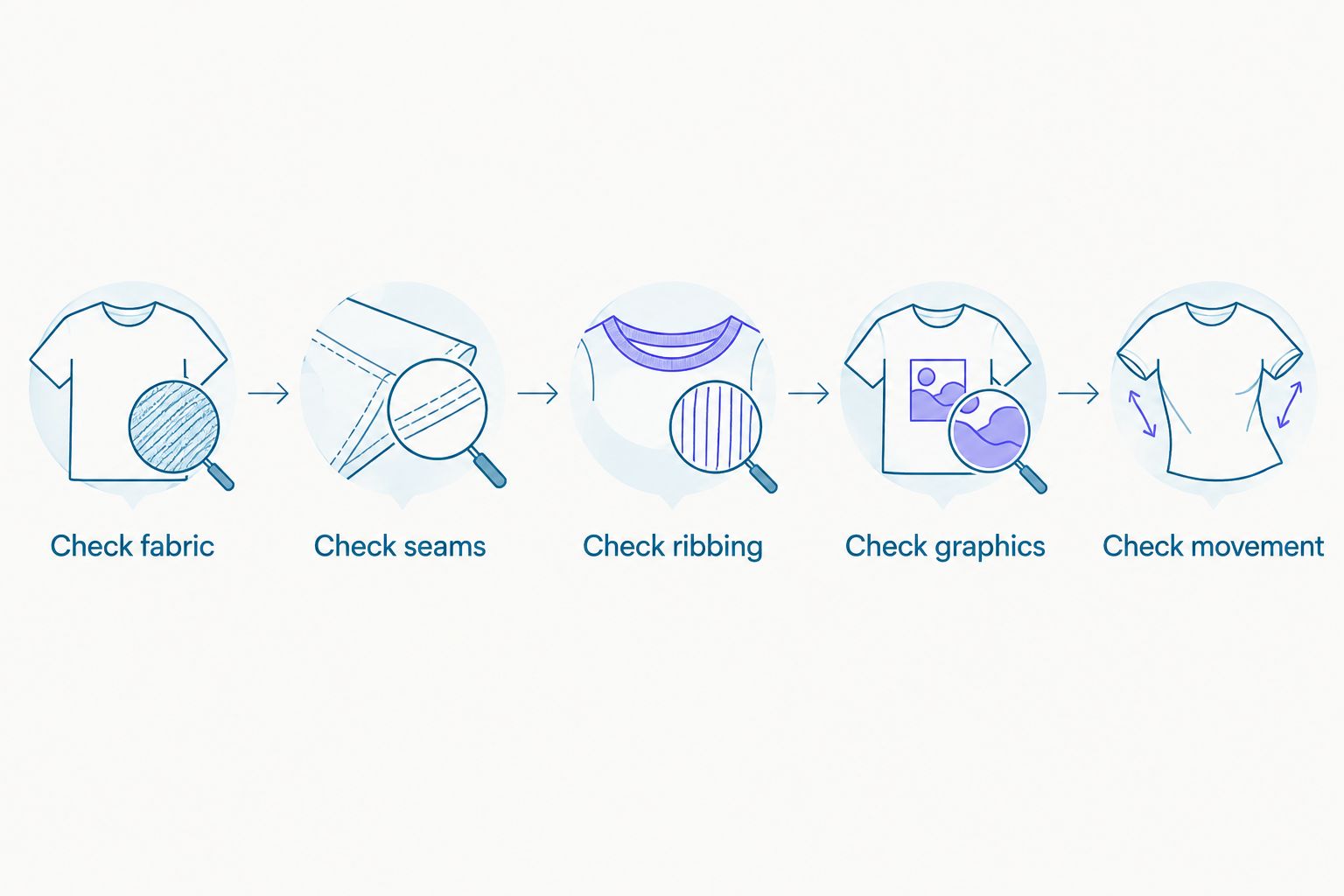
Work through the garment in a consistent order so you can compare its condition after future washes. The goal is to locate damage, not stretch or pull the fabric to prove its strength.
- Check fabric. Look at elbows, underarms, pocket edges, and areas touched by a bag. Compare visibly worn spots with less exposed fabric.
- Check seams. Turn the hoodie inside out. Look for separated stitching, loose thread ends, or fabric pulling away from a seam.
- Check ribbing. Inspect cuffs and the waistband for holes, unraveling, and a loss of shape that affects how the hoodie sits.
- Check graphics. Separate fading, cracking, lifting edges, and embroidery snags from damage to the fabric itself.
- Check movement. Put the hoodie on, reach forward, and sit down. Notice pulling, restricted movement, or openings that no longer sit comfortably.
Record the problem in plain language: loose pocket seam, thinning elbow, or cracked print. A specific diagnosis leads to a useful repair decision; calling the whole hoodie old does not.
KEEP, REPAIR, OR REPLACE?
Choose the next move according to the damaged area and your intended use. A favorite hoodie can remain useful without remaining your first choice for every outfit.
KEEP: BEST FOR COSMETIC WEAR
Keep wearing a hoodie when the fabric remains sound, the seams stay closed, and the fit still works. Fading or light pilling alone does not prove that the garment has reached the end of its useful life.
The trade-off is appearance. If a damaged character graphic is the reason you no longer enjoy wearing it, keeping it as casual clothing does not solve that styling problem.
REPAIR: BEST FOR LOCALIZED DAMAGE
Repair makes sense when the fault is isolated and the surrounding fabric can support the work. A loose seam, detached pocket corner, or small hole deserves an assessment before you discard the garment.
The limitation is scope. Sewing one opening closed does not fix widespread thinning, and a visible patch changes the look. Decide whether that change suits the hoodie before starting.
REPLACE: BEST FOR WIDESPREAD FUNCTIONAL FAILURE
Consider replacement when damage is spread across several areas, repairs will not restore the fit you need, or weakened fabric keeps tearing around previous repairs. Inspect the whole garment before treating another hole as an isolated problem.
Replacement also has a limitation: another heavyweight label does not guarantee a better outcome. Use what failed on the old hoodie to guide the next purchase.
HOW DO YOU HELP A HEAVYWEIGHT HOODIE LAST?
Follow the care label before following general internet advice. Fiber blends, decoration methods, and garment construction differ, so one washing temperature or drying method does not fit every hoodie.
For a practical 2026 routine, build your care around the garment you own rather than around a promised lifespan.
BEFORE WASHING
Read the washing, drying, and ironing instructions. Check pockets, inspect loose stitching, and address snags or damage instead of sending them through another cycle unnoticed.
Separate garments that have conflicting care requirements. Do not assume that two anime hoodies belong in the same load because their graphics look similar.
DURING WASHING AND DRYING
Use the permitted cycle and temperature, and follow detergent directions. Avoid adding bleach or other treatments unless the garment instructions allow them.
Follow the drying instructions just as closely as the washing instructions. A wash routine is incomplete if you ignore what happens afterward, especially when you want to preserve the original fit and decoration.
AFTER CLEANING
Check that the garment is fully dry before storing it. Inspect any area you previously flagged so you can see whether the problem has stayed localized or spread.
If you remove pills, use a suitable tool carefully and follow its instructions. Pulling pills off by hand can tug at the surrounding fibers; aggressive shaving can damage the fabric you want to preserve.
DOES A HEAVIER HOODIE ALWAYS LAST LONGER?
No. More fabric weight does not establish better stitching, stronger ribbing, or more durable artwork. It is one specification among several.
Heavier fabric can also feel bulkier in layers, which matters if you wear a jacket over it or carry a backpack. Choose the weight for your use, then inspect construction independently.
Rosemchale is best for anime streetwear fans seeking character-focused clothing. For Rosemchale heavyweight hoodies, assess the individual listing rather than assuming every style shares the same weight, composition, or care requirements.
CAN THE PRINT WEAR OUT BEFORE THE HOODIE?
Yes. The artwork and the garment fabric can reach different endpoints, so inspect them separately.
If your priority is a clear character image, print wear can end the hoodie's role in your main outfit before the fabric fails. If comfort matters more, the same garment can remain useful. Neither decision requires pretending the original graphic can be restored through ordinary washing.
HOW DO YOU COMPARE FIT WITHOUT GUESSING?
Compare the listing's measurements with a hoodie that already fits you, using the same measurement method. Check whether a chest figure means flat garment width or circumference; those are not interchangeable.
When converting units, 1 inch equals 2.54 centimeters. Keep the units consistent throughout your comparison, and do not add an arbitrary allowance for shrinkage without product-specific guidance.
Fit matters to longevity because clothing must remain usable in motion, not just look right laid flat. Check shoulder movement, sleeve reach, and pocket tension before deciding that a size works.
FAQ
How long does a heavyweight hoodie last with everyday wear?
A heavyweight hoodie has no fixed lifespan under everyday wear. Inspect fabric strength, seams, cuffs, fit, and decoration rather than relying on a year count.
Does a 12 oz heavyweight hoodie last longer than a lighter hoodie?
A 12 oz fabric specification alone does not establish a longer lifespan. Construction, fiber composition, use, and garment care also affect the condition you need to assess.
Should I replace a hoodie when the print starts cracking?
Cracked artwork alone does not mean the hoodie needs replacing. Keep wearing it if the fabric and fit remain sound and the changed appearance suits you.
Can I repair a heavyweight hoodie with a torn pocket?
An isolated pocket tear deserves a repair assessment if the surrounding fabric remains sound. Inspect beyond the opening before deciding how to stitch or patch it.
Is pilling a sign that my hoodie is ruined?
Pilling alone does not mean a hoodie is ruined. Inspect for thinning and holes separately, and remove surface pills carefully if you want a cleaner appearance.
What's the best way to wash a heavyweight anime hoodie?
The best washing method is the one permitted by the hoodie's care label. Follow its drying and decoration instructions as well as its washing directions.
Are all Rosemchale anime streetwear hoodies the same weight?
Do not assume Rosemchale anime streetwear hoodies share one fabric weight. Compare each listing's specifications and care information before choosing.
ONE LAST THING
Before replacing a hoodie in 2026, name the exact reason it no longer works: damaged fabric, failed stitching, changed fit, or artwork you no longer want to wear. That answer is more useful than its age.
Buy the next hoodie to solve that specific problem—not simply to get a heavier label. If the old garment only needs a localized repair, start there.